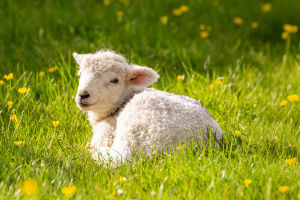
On a quiet hillside, a flock of sheep moves as one, heads down and tails flicking in rhythm with the wind.
They might seem simple at first glance, but these animals are full of intriguing behaviors and surprising abilities that often go unnoticed.
Observing sheep closely reveals a world of intelligence, social complexity, and adaptability.
Unique Physical Features
1.Diverse wool patterns
Sheep wool varies widely in texture, color, and density depending on breed and climate. Some breeds produce dense, crimped wool suitable for cold regions, while others have softer, thinner coats adapted for warmer areas. Beyond providing warmth, wool serves as a natural water-resistant barrier, helping sheep thrive in various environments.
2.Specialized hooves
Sheep hooves are split, allowing them to maintain balance on uneven, rocky terrain. This structure provides traction on hills and prevents slipping, which is essential for grazing in mountainous or rugged landscapes. Regular movement also keeps hooves naturally trimmed, reducing the risk of injury.
3.Keen vision
Unlike humans, sheep have panoramic vision with a nearly 360-degree field. Their eyes are positioned on the sides of their head, enabling them to detect predators approaching from almost any direction. This wide view is crucial for survival in open pastures.
Social Behavior and Communication
1.Strong flocking instinct
Sheep are highly social and rely on flocking behavior for safety. Individuals follow leaders, respond to vocal cues, and stick together when threatened. This natural tendency reduces stress and helps protect the group from predators.
2.Vocal communication
Sheep communicate using bleats, grunts, and subtle body movements. Mothers can recognize the unique calls of their lambs, even among dozens of other voices, which demonstrates remarkable auditory memory and social recognition.
3.Hierarchical interactions
Within flocks, sheep establish gentle hierarchies. Dominance is often displayed through posture or nudging rather than aggression. This social structure reduces conflict and helps maintain order during feeding and movement.
Intelligence and Memory
1.Learning capabilities
Sheep can learn and remember tasks, such as navigating simple mazes or responding to feeding signals. Studies have shown that they can recognize up to 50 individual faces, both sheep and human, indicating strong visual memory.
2.Problem-solving skills
When faced with barriers or obstacles, sheep can figure out ways to reach food or water. They display patience and persistence, often working individually or observing others before attempting a solution.
3.Spacial awareness
Sheep have excellent spatial memory, remembering the locations of food, water, and shelter within their territory. This skill allows them to navigate pastures efficiently and return to familiar spots over long periods.
Adaptability and Environmental Interaction
1.Grazing strategies
Sheep adjust their feeding patterns based on pasture availability. They often graze in coordinated patterns, selecting nutrient-rich plants while avoiding overgrazed areas. This behavior helps maintain sustainable vegetation in shared habitats.
2.Climatic tolerance
Different breeds have adapted to a range of climates, from arid plains to cold mountains. Wool thickness, body size, and grazing habits all contribute to their ability to cope with temperature extremes and seasonal changes.
3.Mud and dust rolling
Sheep often roll in dust or mud, which helps protect their skin from parasites and excess sun exposure. This simple yet effective behavior showcases how instinctive actions aid in health maintenance without external interventions.
Sheep may seem ordinary at first, but their behaviors, memory, and social intelligence reveal a complexity that often surprises observers. Watching a flock navigate a hillside, communicate, and solve problems highlights how even familiar animals possess remarkable traits. Next time you pass a pasture, take a moment to notice the subtle interactions and clever adaptations—sheep are quietly extraordinary companions in the natural world.