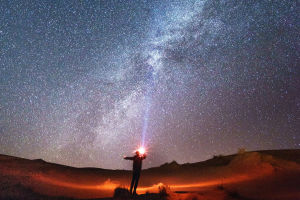
When we gaze at the night sky, Jupiter immediately draws our attention with its brilliant shine. But beyond its dazzling appearance, this giant planet holds some shocking secrets.
Imagine standing next to Jupiter—you would quickly realize it’s not just the largest planet in the solar system, but its mass is 2.5 times that of all the other planets combined.
This colossal body, with its immense gravity, influences nearly every corner of the solar system. Yet, Jupiter’s true power isn’t just about size or mass—it’s about the profound impact it has had on the formation of planets within our cosmic neighborhood.
Born With the Solar System
Jupiter’s story dates back to the very birth of the solar system. Scientists believe Jupiter formed from the swirling dust and gas around the young Sun. Roughly 4.6 billion years ago, Jupiter already existed. Its core likely consisted of ice and rock that clumped together under the Sun’s gravity. As more material was pulled in, Jupiter’s mass grew rapidly, and so did its gravitational pull. This growth likely took only a few million years, transforming Jupiter into the massive gas giant we know today.
Early Collisions Shaped Its Spin
During its formation, Jupiter probably endured several massive collisions. These impacts not only increased its mass but may have altered its rotation and orbit. Researchers studying Jupiter’s surface and atmosphere have found traces of these early cosmic crashes. For example, Jupiter’s fast rotation—completing one spin in just about 10 hours—may be a result of these early events.
Its Great Red Spot, a gigantic storm system, could also be linked to internal heat and intense atmospheric dynamics. This storm has raged for at least 400 years, and its scale is large enough to engulf Earth.
Protector of the Planets
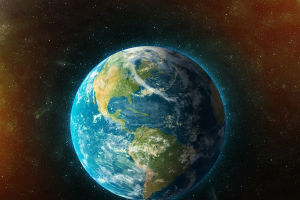
Jupiter’s presence affects the orbits and stability of other planets and may even have influenced the emergence of life on Earth. Its strong gravity warps the paths of asteroids and comets, redirecting many away from Earth. This “cosmic shield” effect likely reduced the number of early collisions on our planet, giving life a safer environment to develop. In this sense, Jupiter isn’t just a massive planet—it’s a guardian of Earth’s early life.
Solar System’s Guardian
Jupiter’s influence doesn’t stop there. Its gravity captured numerous moons and attracted many small asteroids and comets, effectively acting as a bodyguard for the solar system. Had these objects approached Earth, they could have caused catastrophic impacts. Additionally, Jupiter subtly affects the orbits of other planets, helping to stabilize Earth’s trajectory and axial tilt. Its role as a cosmic protector cannot be overstated.
How Jupiter Became So Powerful
How did Jupiter become such a dominant force in the solar system? One leading theory is that it gathered a vast amount of material very early on, rapidly forming a giant gas ball. Over time, its gravity strengthened, allowing it to pull in even more material, growing larger and more influential. Jupiter’s growth demonstrates how a single planet can shape the dynamics of an entire planetary system.
Mysteries Still Await
Despite decades of research, many questions about Jupiter remain unanswered. Why has the Great Red Spot lasted for centuries? How did its intricate moon system form? Answers to these mysteries could reveal essential clues about the solar system’s origin and evolution. By studying Jupiter and its moons, scientists hope to uncover the processes that shaped not only Jupiter but also the environment that eventually allowed Earth to host life.
Life’s Cosmic Guardian
Jupiter has a special significance for life on Earth. Without its gravitational protection, our planet might have suffered more frequent asteroid or comet impacts, potentially altering the course of evolution. In many ways, Jupiter’s massive presence has been a silent protector, giving life a chance to thrive safely.
Learning From Jupiter
Jupiter’s history and role in the solar system are central to astronomical research. Observing and studying this giant allows us to glimpse the solar system’s past and understand how other planets may have formed. With advancing technology, future space missions promise to reveal even more secrets about Jupiter, offering insights into the nature of this extraordinary planet.
The Giant Among Giants
Jupiter, the solar system’s giant, is both awe-inspiring and mysterious. Its presence not only influences planetary orbits but may have shaped life on Earth itself. As scientific exploration continues, our understanding of Jupiter deepens, and its secrets slowly unfold. Each new discovery brings us closer to appreciating the extraordinary forces that govern our cosmic neighborhood. So next time we look up at the night sky, we can marvel at Jupiter—not just as a distant planet, but as a silent guardian of life itself.